
Fresh oil can make a report look better and a reservoir look cleaner. If the same water, particles, wrong-product signal or wear debris returns, the oil change may have treated the fluid while leaving the source in place.
The useful question is not simply whether the oil was replaced. Ask what the new charge inherited from the machine, the service method and the operating condition. The answer determines whether the team needs a corrected handling practice, a repair, controlled cleaning, a justified flush, or further investigation.
Trace what the new oil inherited
Eaton separates contamination sources into contaminated new oil, material already in the system, contamination entering during operation and debris generated inside the machine. That distinction is useful after a repeated problem because each source calls for different work.
The entry path stayed open
A damaged seal, ineffective breather, cooler leak or exposed fill point keeps admitting the same contaminant. Removing water or particles can reduce the immediate concentration, yet recurrence remains likely until the path is controlled.
The drain left material behind
A drain does not necessarily empty lines, low points, housings or settled material on a reservoir floor. New oil can mobilise residue and carry it back to the sample point. System geometry, contaminant type and maintenance history determine whether inspection, cleaning, filtration or flushing is appropriate.
The fluid identity was wrong or mixed
Confirm the approved product, batch and transfer container. ASTM D7155 warns that a mixture can appear visually acceptable while losing important performance. Its procedure covers turbine lubricating oils, so other equipment needs the applicable supplier and OEM review.
The machine kept generating the evidence
A wearing component, excessive temperature or changed duty can continue producing debris or degrading the oil. A cleaner first result after service may reflect dilution with new oil. It does not by itself establish that the generating cause is gone.
Decide the service scope before the drain starts
A flush is not required for every oil change. When one is justified, it needs an approved method, compatible fluid, defined system boundary and acceptance evidence. ASTM D6439 treats cleaning and flushing as coordinated system work and gives equipment-specific instructions priority. Although its scope is turbine lubrication systems, that planning principle applies more broadly.
| Evidence before service | Question to resolve | Possible scope implication |
|---|---|---|
| Water returns after earlier removal | Where can water enter under current operation or washdown? | Repair or control the entry path, then remove water using the approved method. |
| Debris is found in low points or filters | What areas remain outside the normal drain and circulation path? | Inspect the included boundary and decide whether cleaning, filtration or flushing is justified. |
| Product identity is uncertain | What is in the machine, what will be added, and has compatibility been reviewed? | Hold the fill until identity, compatibility and changeover requirements are settled. |
| Wear evidence continues | Which operating or component condition could still generate it? | Coordinate oil service with inspection or repair instead of using fresh oil as the only response. |
Use a before and after service evidence checklist
The service record needs enough detail for another person to understand what changed. Photos can help, but labelled samples, product records, work findings and operating context carry the decision.
Oil service evidence board
Before Define the condition
- Asset, compartment, product and current oil hours are confirmed.
- The latest result is compared with a representative baseline and recent work.
- The suspected entry path, retained material or generating cause is recorded.
- The drainable boundary and any lines, low points, filters or coolers in scope are identified.
- The approved replacement product, handling method and transfer equipment are verified.
- Acceptance evidence, operating state and responsible reviewer are agreed.
After Record what changed
- Product, batch, quantity and transfer route are recorded.
- As-found and as-left filter, strainer, breather, seal and reservoir observations are captured.
- Repairs, cleaning, filtration or flushing performed are named with their actual boundary.
- The verification sample records point, machine state, circulation context and time after service.
- Results are compared with the agreed acceptance evidence, not only the previous abnormal value.
- Any open action has an owner, due point and operating restriction where required.
Verify the system condition, not only the refill
A post-service sample must represent the machine state being assessed. ASTM D8112 highlights the importance of sample location and plausible failure modes. Use the approved point and method, and allow enough controlled circulation for the selected method to produce a representative result. The equipment, laboratory and site procedure set that timing.
Review the result with the filter or strainer findings, leakage checks, temperature, vibration, pressure and operating duty that matter to the suspected cause. A clean early sample shows that the intervention affected the oil. Continued control of the suspected path or generating condition is what supports closure.
| Decision | Named owner | Evidence returned |
|---|---|---|
| Problem definition | Lubrication or reliability lead | Comparable trend, suspected mechanism and acceptance basis |
| Work boundary | Planner or maintenance supervisor | Approved work scope, isolation and inspection points |
| Service execution | Technician or service team | As-found and as-left record, product identity and actual work completed |
| Return to operation | Operations with maintenance | Operating context, restrictions and acceptance signoff |
| Open corrective action | Assigned action owner | Due point and evidence needed before closure |
Plan the service around the cause
VAS can help review the lubricant route, define the work boundary and build a practical evidence record for the machine.
Sources and scope
This article applies published technical principles to industrial lubrication service planning. It does not prescribe a universal oil-change interval, flushing method, cleanliness code or sample timing. Current OEM instructions, lubricant supplier advice, laboratory guidance and site procedures govern the actual work.
- Eaton Vickers Filtration Master CatalogSeparates contaminated new oil, built-in debris, ingressed contamination and internally generated contamination in hydraulic and oil-lubricated systems.
- ExxonMobil lubricant storage and handling guidanceDescribes how water, dust, dirty dispensing equipment and cross-mixing can be introduced during storage and transfer.
- ASTM D7155: Evaluating compatibility of turbine oil mixturesExplains why apparent mixing is not proof of compatibility or equivalent performance. Its test practice is scoped to turbine lubricating oils.
- ASTM D6439: Cleaning and flushing turbine lubrication systemsTreats cleaning, flushing, purification and contamination monitoring as a planned system activity. Equipment-specific instructions take precedence.
- ASTM D8112: In-service fluid samplingExplains why sample location and representative sampling matter when assessing both fluid and machine condition.
- ICML 55 lubrication management standardsPlaces lubricant selection, storage, handling, flushing, sampling, work control and root cause work within a managed lubrication programme.
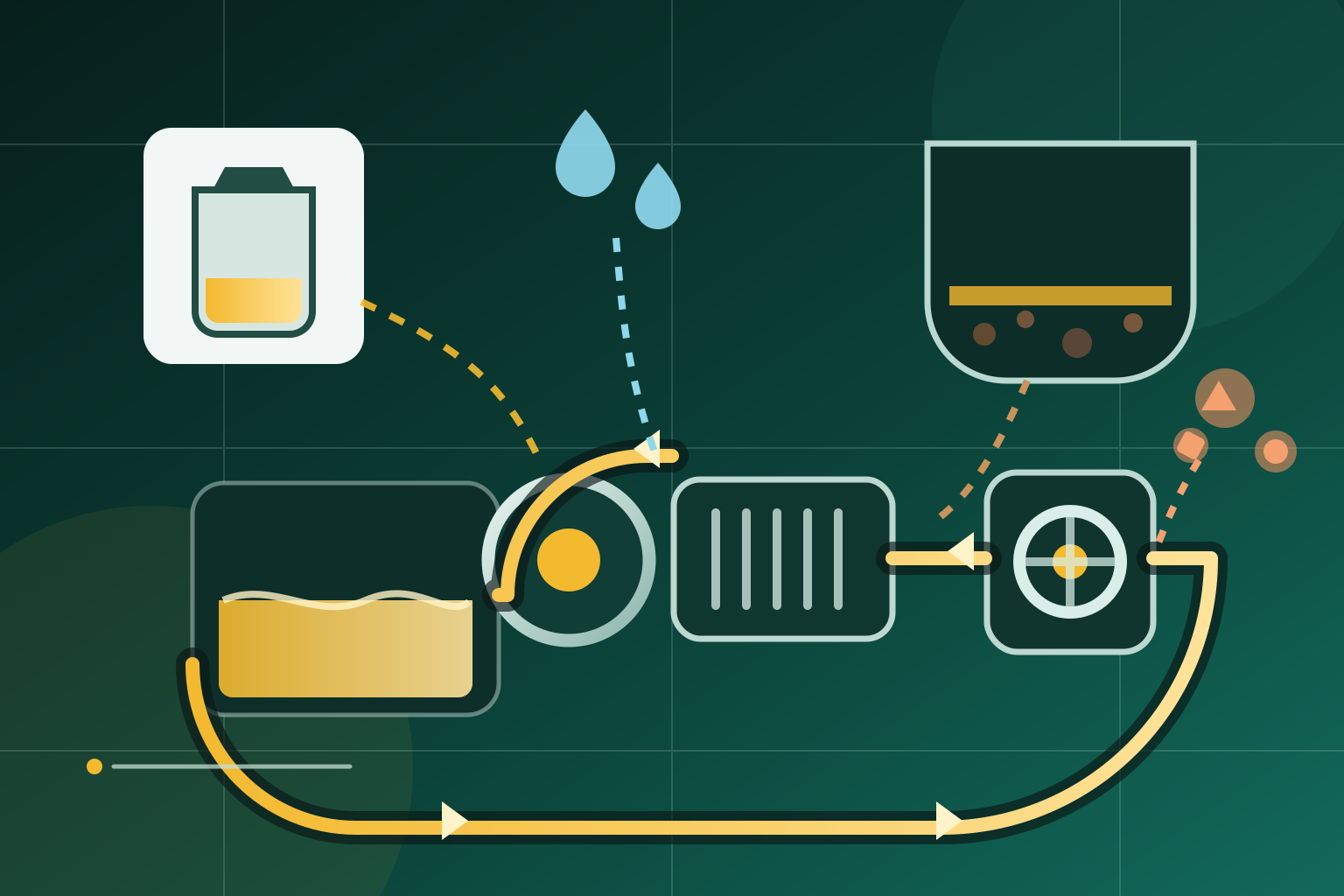
The oil-loop artwork and evidence boards were created for this article. They are conceptual and do not document a client asset, field result or required piping layout.